Parkinson’s disease can affect movement, balance and everyday activities, often developing gradually over time. Early changes such as hand tremors, muscle stiffness, slower movements or difficulty walking deserve proper medical assessment.
At Kalyani Hospital, Gurgaon, patients and caregivers can enquire about an appropriate consultation to discuss symptoms, understand possible causes and explore suitable next steps in care.
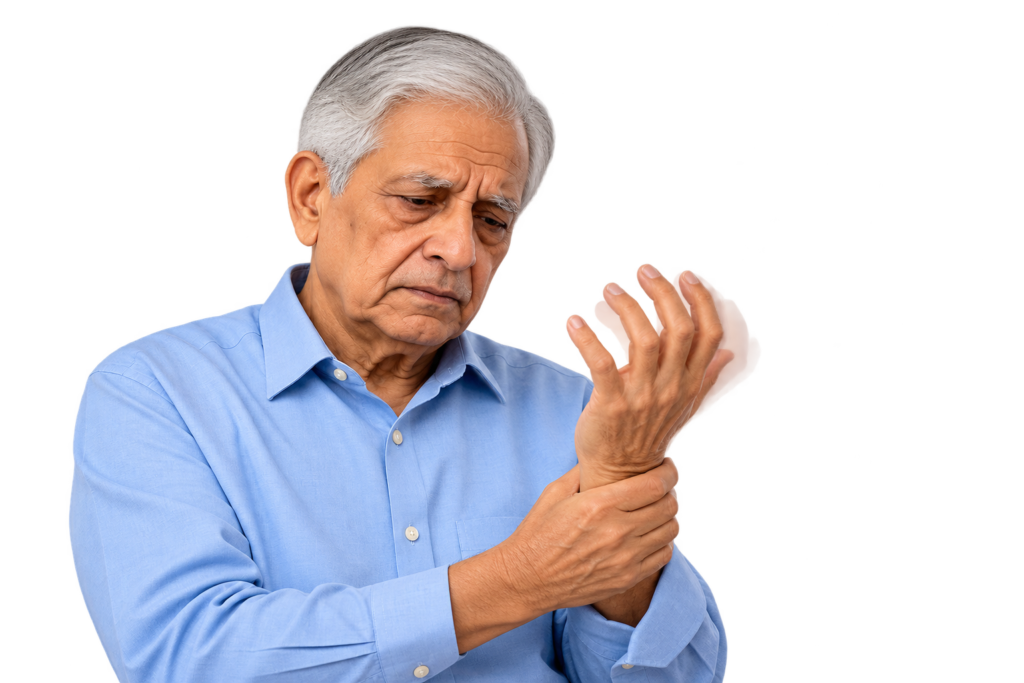
Parkinson’s disease is a progressive neurological condition that affects the brain systems responsible for controlling movement. It is associated with a reduction in dopamine, a chemical that helps the brain coordinate smooth and controlled movements.
The condition can affect people differently. One person may notice a tremor, while another may experience stiffness, slower walking or difficulty with balance. Some people also experience sleep disturbances, constipation, changes in their sense of smell or mood-related symptoms.
Because other conditions can cause similar problems, persistent symptoms should be assessed by an appropriate healthcare professional rather than diagnosed through online information alone
Tremor or shaking, particularly when a hand is resting.
Slower movement while walking, dressing or completing routine tasks.
Stiffness in the arms, legs or other muscles.
Smaller handwriting or reduced arm movement while walking.
Changes in posture, balance or the way a person turns.
Sleep problems, constipation or a reduced sense of smell.
Not everyone experiences the same symptoms. A tremor alone does not establish a diagnosis, and some people with Parkinson’s disease do not initially notice prominent shaking.
Parkinson’s disease is generally diagnosed through a clinical assessment. A healthcare professional reviews the patient’s symptoms, medical history and movement patterns, including walking, stiffness and tremors.
There is no single routine test that definitively confirms every case. Depending on the presentation, additional investigations or brain imaging may be used to look for other possible causes. Referral to a neurologist may be appropriate when Parkinson’s disease is suspected.
For the appointment, patients can bring previous reports, a current medication list and notes about when symptoms began. These details help explain how the condition is affecting daily life.
Medication: Prescribed medicines can improve certain movement symptoms. Selection, timing and dosage require professional guidance.
Physiotherapy and rehabilitation: When appropriate, supportive therapies can help address movement, flexibility, walking and balance.
Daily activity and safety: Suitable physical activity, safer home arrangements and routines tailored to individual needs may support everyday functioning.
Ongoing review: Symptoms and treatment needs can change. Regular follow-up helps assess the response to treatment and identify concerns that need attention.
Not every treatment is suitable for every patient. Any medication changes should be discussed with the treating clinician.
Arrange a medical assessment if you or a family member has persistent tremors, unexplained stiffness, increasingly slow movements, difficulty walking or recurring balance problems.
Seek emergency medical care for sudden weakness, facial drooping, abrupt speech difficulties or other sudden neurological changes. These are not typical gradual signs to simply monitor at home.
When movement changes begin to interfere with everyday life, patients and families may need clear information about the next step. A consultation can help establish what needs to be assessed and whether a specialist referral or further investigation is appropriate.
Patients can contact Kalyani Hospital, Gurgaon, to enquire about the availability of a suitable consultation. Confirm the relevant specialist and services with the hospital before publishing this page or arranging a visit.
Before attending, prepare a short symptom history, a list of current medicines and any previous investigation reports. If a caregiver has noticed changes in walking, speech or daily activities, their observations may also be useful.
Look for a qualified neurologist with relevant experience in Parkinson’s disease and movement disorders. Ask about the assessment process, follow-up arrangements and treatment options appropriate to the patient’s symptoms. Contact Kalyani Hospital to confirm current specialist availability before booking.
Yes, a tremor can be one of the early symptoms, but not everyone develops one. A slight hand tremor can also have other causes, so it should not automatically be considered Parkinson’s disease.
No. Parkinsonism describes a group of movement symptoms, such as slowness, stiffness and tremor. Parkinson’s disease is one cause of Parkinsonism, but certain medicines and other neurological conditions can produce similar symptoms.
Parkinson’s disease is more common in older adults, but it can also occur in younger people. Age alone cannot confirm or exclude the condition; persistent symptoms need appropriate assessment.
If you or a loved one is experiencing tremors, stiffness, slower movements or changes in balance, the right next step is to seek an appropriate medical assessment.
Contact Kalyani Hospital, Gurgaon, to enquire about a suitable consultation and discuss the next steps for evaluation and care.