Jaw pain, clicking sounds while opening your mouth, or difficulty chewing can affect your everyday activities. These symptoms may be associated with temporomandibular joint (TMJ) disorders, which affect the joints and muscles responsible for jaw movement.
At Kalyani Hospital, Gurgaon, patients can enquire about consultation for jaw joint pain and related symptoms. Understanding the underlying cause is important for identifying appropriate treatment options.
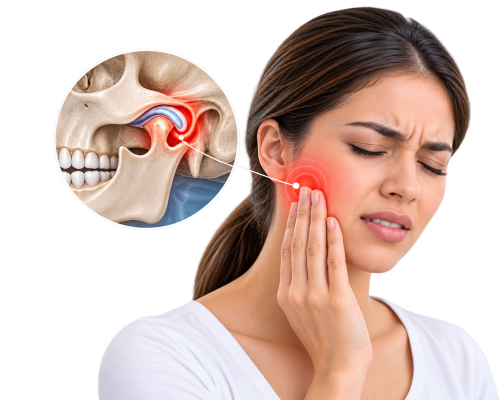
The temporomandibular joints connect your lower jaw to your skull and help you open and close your mouth, chew food, speak and yawn. TMJ disorders affect these joints or the surrounding muscles and may cause pain, stiffness or restricted movement.
Symptoms can range from occasional discomfort to persistent pain that interferes with eating or speaking. Not every clicking sound indicates a condition that requires treatment, but painful clicking or difficulty moving the jaw should be evaluated.
TMJ-related symptoms vary depending on the underlying cause. Common symptoms include
TMJ disorders may cause discomfort around the jaw joint and surrounding muscles. Common symptoms include:
If these symptoms persist, worsen or affect your daily routine, consider seeking medical advice.
TMJ pain can develop due to several factors. Teeth grinding and jaw clenching may place additional pressure on the jaw muscles and joints. Stress-related muscle tension, facial injuries and certain joint conditions can also contribute to symptoms.
In some cases, the exact cause may not be immediately clear. A clinical assessment helps evaluate your symptoms and determine whether further investigation is needed.
Diagnosis generally begins with a review of your symptoms, medical history and jaw movement. The healthcare professional may assess tenderness, restricted movement and sounds during opening or closing of the mouth.
Depending on the findings, imaging such as X-rays, CT scans or MRI may be considered. These investigations are not necessary for every patient; the decision depends on the suspected cause and clinical findings.
Eating softer foods temporarily, avoiding chewing gum and limiting excessive jaw movement may help reduce strain. Warm or cold compresses may also provide relief for some people.
A healthcare professional may recommend appropriate medication for pain or inflammation after considering your medical history and other medicines.
Selected patients may benefit from guided exercises or physiotherapy to improve jaw movement and manage muscle-related discomfort. Exercises should be appropriate for the underlying condition.
If clenching or grinding contributes to your symptoms, a dental assessment can help determine whether a protective oral appliance or other measures may be suitable.
Persistent symptoms may require further assessment and additional treatment depending on the cause.
Experiencing ongoing jaw pain or difficulty chewing? Contact Kalyani Hospital, Gurgaon, to enquire about consultation and appropriate assessment options.
Occasional mild discomfort may improve with conservative care, but persistent pain, difficulty chewing or restricted jaw movement should not be ignored.
Seek prompt medical attention if your jaw suddenly becomes locked, you cannot open or close your mouth normally, or severe pain follows an injury. Jaw pain accompanied by chest pressure, breathlessness or sweating requires emergency assessment.
Jaw pain can have several possible causes, so understanding your symptoms is an important step towards appropriate care.
At Kalyani Hospital, Gurgaon, patients can enquire about consultation for TMJ-related concerns and discuss their symptoms, assessment requirements and possible next steps.
During your consultation, you can discuss the duration of your symptoms, difficulties with jaw movement, possible contributing factors and whether further investigations may be needed. The appropriate approach depends on the clinical findings and individual requirements.
TMJ pain refers to discomfort affecting the jaw joints or surrounding muscles. It may occur while chewing, speaking or opening the mouth.
Some mild symptoms improve with time and conservative care. Persistent or worsening symptoms should be assessed to identify the cause.
Depending on the symptoms and suspected cause, assessment may involve a dentist, an oral and maxillofacial specialist or another appropriate healthcare professional.
No. Clicking without pain or restricted movement may not require treatment. Painful clicking, locking or reduced jaw movement warrants assessment.
Persistent jaw pain, clicking with discomfort or difficulty opening your mouth can interfere with daily activities. An appropriate assessment can help identify possible causes and guide suitable care.
Contact Kalyani Hospital, Gurgaon, to enquire about consultation for TMJ-related symptoms and discuss the next steps for assessment.